Who this guide is for
This guide is for travelers with tattoos who want their first onsen experience in Japan to feel simple, predictable, and low-stress.
It is especially useful if you:
- do not want to guess whether a public bath will allow tattoos
- are booking your first ryokan stay
- care more about privacy and certainty than about the classic shared-bath experience
- want to reduce the chance of paying for the wrong room or facility
If you still need the broad rule first, read Can You Go to an Onsen in Japan With Tattoos? before this guide.
Short answer
For most tattooed travelers, a real private bath is the safest place to start.
That usually means one of three things:
- a reservable private bath
- a family bath used privately for your time slot
- a room with its own bath, sometimes an attached open-air bath
That path is usually easier than trying to decode a shared-bath policy from a listing page and hoping you read it correctly. Still, names vary. Booking rules vary too. Some properties also use “private” language loosely, so you should confirm the exact bath type and current tattoo policy on the official website or by phone before you pay.
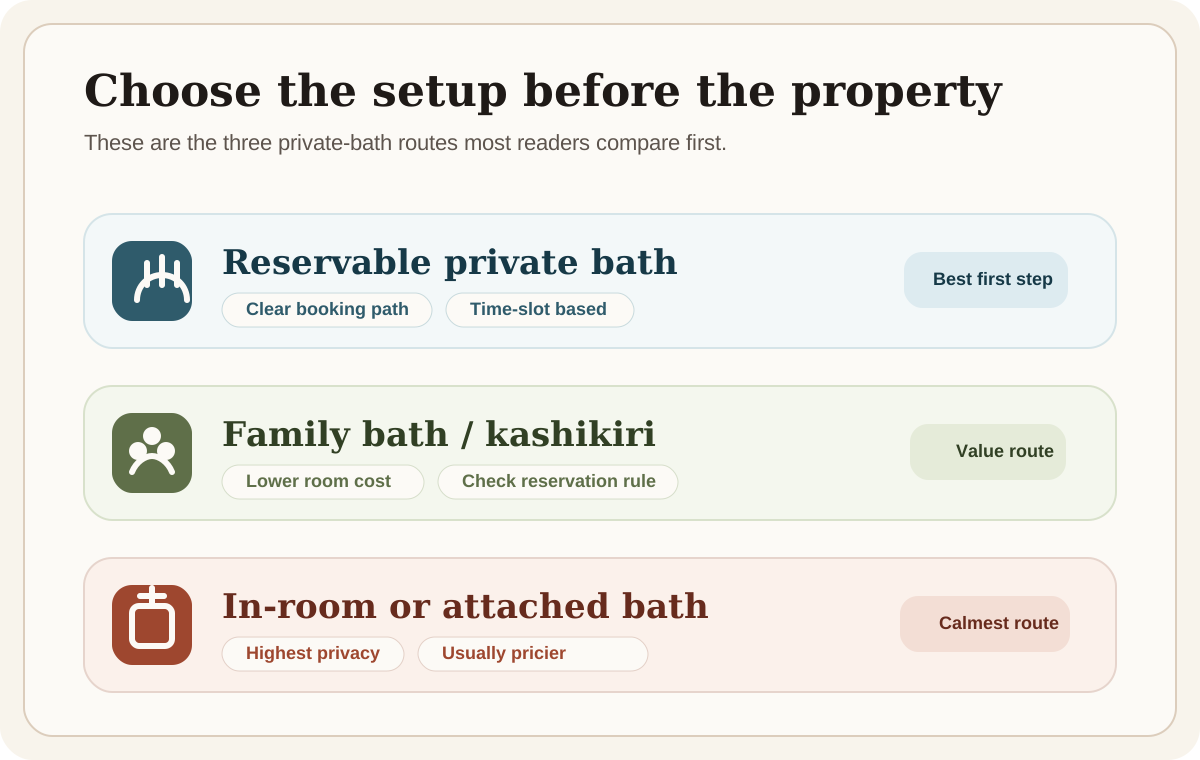
Three private-bath setups most travelers compare first: reservable bath, family bath, and in-room bath.
What “private onsen” usually means in Japan
Travelers often search for “private onsen in Japan” as if it were one clear category. In practice, it can point to several different setups, and the differences matter when you are booking.
1. Reservable private bath
This is usually the cleanest first choice. You book a private bath or room for a fixed time slot, and only your group uses it during that window.
Best for:
- first-timers
- couples
- travelers who want a simple yes-or-no booking decision
2. Family bath or kashikiri bath
This is close to a reservable private bath, but the wording may be “family bath” or the Japanese term kashikiri.
Best for:
- families
- couples
- travelers who want privacy without booking the most expensive room
3. Room with its own bath
Some ryokan rooms include a private bath, open-air bath, or attached bath. This is often the calmest option because the whole decision happens inside your room booking, but it is usually more expensive.
Best for:
- travelers with visible tattoos who want maximum privacy
- people planning a special stay
- travelers who do not want to manage bath time slots
Why this is often safer than a public bath
A public bath asks you to solve several uncertain things at once:
- whether tattoos are allowed
- whether cover-up rules exist
- whether staff interpretation has changed
- whether a town-level reputation matches the rule at your property
A genuine private option removes much of that uncertainty. It does not solve every detail, but it sharply reduces the chance that you arrive, check in, and discover the shared-bath rule is stricter than you expected.
That matters because official guidance already shows that tattoo treatment varies by property, while some destinations and ryokan types also offer clear private-bath options. JNTO introduces private onsen and attached open-air baths as real choices, and official tourism pages in places like Hakone also show reservable private baths in practice.
When paying extra for a private option makes sense
Paying extra for a private option often makes sense if:
- this is your first onsen trip in Japan
- you are worried about an awkward check-in or refusal
- your itinerary is tight and you cannot afford a mistake
- you are traveling as a couple or family and want a calmer experience
- you would rather trade some money for less uncertainty
They are not always necessary. Some destinations, such as Kinosaki, officially state that their public baths can be used by tattooed visitors. Even so, private access is often the easier first decision because it removes more uncertainty from the booking stage.
What to check before you book
Do not stop at the words “private onsen” in a listing. That phrase sounds reassuring, but it can hide the exact detail you actually need.
Check these points on the official website or by phone:
- Is the bath truly private for your group, or just less crowded?
- Do you need to reserve a time slot in advance?
- Is there an extra fee for the private bath?
- Is the bath in your room, in a separate building, or shared by reservation?
- Does the tattoo policy still affect public baths, changing rooms, or other shared facilities?
- Is the room bath actually hot spring water, or just a private bath?
- What is the cancellation or rescheduling policy if private-bath slots are limited?
If the answers are unclear, treat that as a warning sign, especially on your first booking.
Common mistakes first-time travelers make
Assuming “private” means the same thing everywhere
It does not. A room bath, a reservable open-air bath, and a family bath can all appear under similar wording, yet the experience and booking rules can be quite different.
Assuming a tattoo-friendly town means every property is easy
Town reputation helps, but property rules still matter. A tattoo-friendly town does not remove the need for a property-level check.
Booking the room before checking how the bath works
Some travelers book the nicest-looking room and only later realize that:
- the bath needs a separate reservation
- the private slot costs extra
- the bath is not hot spring water
- the tattoo rule still applies in the main bath area
Best option for most readers
If you want the simplest first step, prioritize this order:
- a reservable private bath with clear official wording
- a room with its own bath if you want maximum privacy
- a family bath with a clear private-use policy
That order is not about luxury. It is about reducing the number of unclear variables before your first booking, so the trip feels easier from the moment you reserve it.
When to verify with the official source
Always verify these points with the official website or by phone before booking or visiting:
- tattoo policy
- bath type
- whether the private bath must be reserved
- whether the private bath costs extra
- whether public facilities follow different rules
Policies can change, and editorial guidance should not replace the property’s current official information.
Next guide to read
- Start with Can You Go to an Onsen in Japan With Tattoos? if you still want the broad rule first.
- Read Private Bath vs In-Room Onsen vs Family Bath: Which Option Fits You Best? if you want to compare the main private options side by side.
- Read Booking a Tattoo-Friendly Ryokan: 9 Checks Before You Pay if you have already narrowed the bath type and want a safer booking flow.
- Then move to a property-check guide or a regional guide once you know which private option feels right.