Who this guide is for
This guide is for travelers with tattoos who want the honest baseline before they choose a town, a ryokan, or a private bath.
It is especially useful if you:
- are wondering whether tattoos are an immediate no at every onsen
- want a calmer first plan without overpaying
- need to know when a public bath may still work and when it probably will not
- want a practical next step, not a vague cultural answer
Short answer
Yes, you can sometimes go to an onsen in Japan with tattoos. No, you should not assume that every onsen, ryokan, or bathhouse will allow them.
The practical point is simple: rules vary by facility. Some public baths do not allow tattoos. Some allow small tattoos if they are covered. Some towns and facilities are more flexible than others. If you do not want to gamble on the rule, a clearly described private bath is usually the calmer first choice.
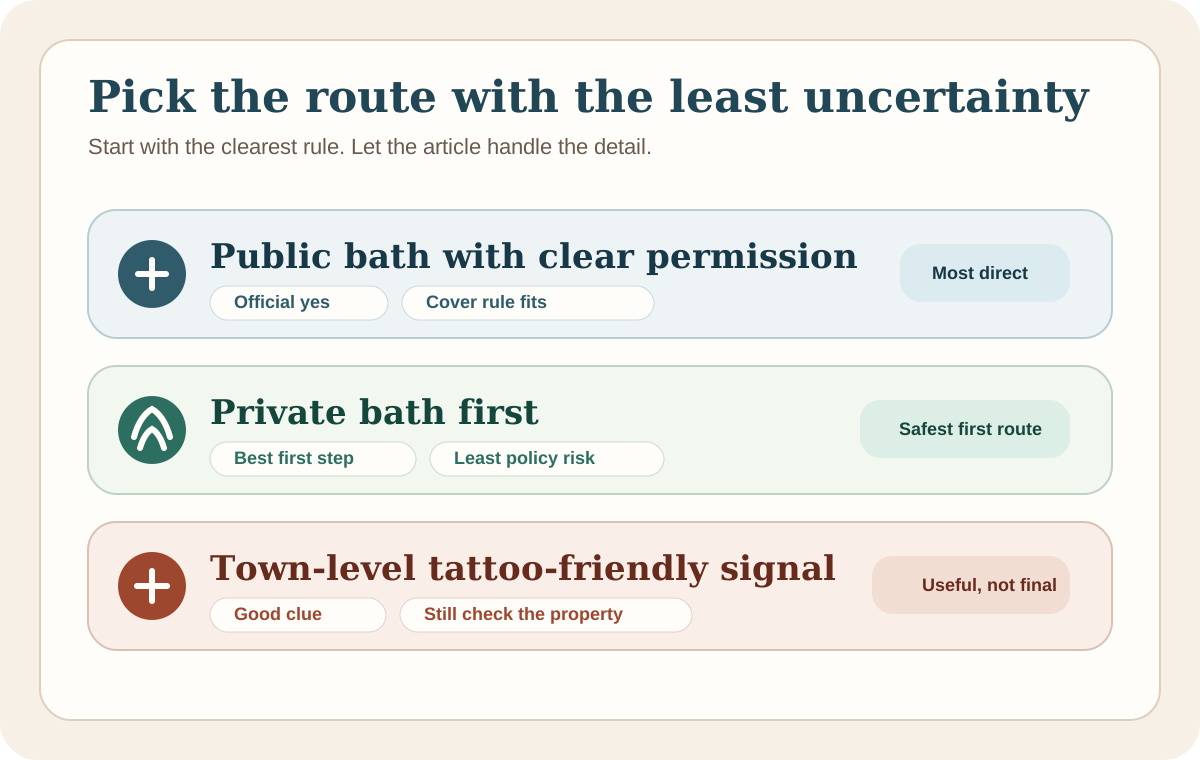
Quick route map: clear public-bath permission, private bath first, or a town-level clue that still needs a property check.
Why the answer changes from one place to another
JNTO’s current FAQ makes the baseline clear: tattoos do not usually cause problems in daily life, but some onsen, public baths, and pools may still restrict entry.
That is why broad country-level advice only gets you so far. In practice, your experience changes based on:
- the individual facility
- whether the bath is communal or private
- whether cover rules exist for smaller tattoos
- whether you are looking at a public bathhouse, a ryokan, or a hotel spa
What usually happens at public baths
If you are considering a shared onsen, expect one of a few patterns:
- tattoos are not allowed
- smaller tattoos may be allowed if they are fully covered
- the facility may not state the rule clearly enough online
- a town may feel more open overall, but the property still sets its own policy
This is why public-bath planning can feel stressful for first-time visitors. You are not only learning etiquette. You are also trying to predict how a specific facility will interpret its own policy on the day you arrive.
When a public onsen may still work
A public onsen can still be realistic if:
- the official site clearly says tattoos are allowed
- the facility explains a cover rule that fits your situation
- the town itself is known for tattoo-friendly public baths, and the specific bath confirms it
Kinosaki is the clearest official example in the current source set. Its official visitor guide says people with decorative tattoos may use the town’s seven public hot springs, while also warning that some accommodations set different rules for their own baths.
Why private baths are often the easier first choice
If your goal is to enjoy bath culture without second-guessing the rule, private baths usually remove the biggest unknown.
JNTO’s onsen guidance already points tattooed visitors toward tattoo-friendly facilities, private baths, and rooms with attached open-air baths. That matters because a private setup strips out much of the uncertainty around communal access.
For many first-time visitors, the lower-risk route looks like this:
- start with a reservable private bath
- consider a room with its own bath if privacy matters most
- treat public-bath access as a bonus, not the foundation of the trip
What to check before you visit or book
Before you rely on any onsen plan, confirm these points on the official website or by phone:
- Does the tattoo rule apply only to the communal bath, or to all bath facilities?
- If a private bath exists, is it reservable, included, or separately charged?
- If the room has a bath, is it actually onsen water or a standard bath?
- Are there cover rules for smaller tattoos?
- Has anything changed since the page was last updated?
If the page stays vague after those checks, do not force a yes-or-no answer out of it. Move to a lower-risk option or ask the property directly.
A calm first route if you do not want to guess
If you want the safest starting point, use this order:
- read Private Onsen in Japan for Tattooed Travelers: The Lowest-Risk First Option
- compare the setups in Private Bath vs In-Room Onsen vs Family Bath: Which Option Fits You Best?
- use How to Read Tattoo Policies on Ryokan and Hotel Websites in Japan if a property page still feels vague
- move to Booking a Tattoo-Friendly Ryokan: 9 Checks Before You Pay when you are close to paying
That route is usually faster than trying to force certainty out of every shared-bath listing from the start.
When to verify with the official source
Always verify current tattoo rules with the official website or by phone before booking or visiting.
Policies can change, and town-level reputation should never be treated as a guarantee for every property.
Next guide to read
- Read Private Onsen in Japan for Tattooed Travelers: The Lowest-Risk First Option if you want the simplest lower-risk route next.
- Read How to Read Tattoo Policies on Ryokan and Hotel Websites in Japan if you are already looking at property pages.
- Read Booking a Tattoo-Friendly Ryokan: 9 Checks Before You Pay if your next step is a real booking, not just research.